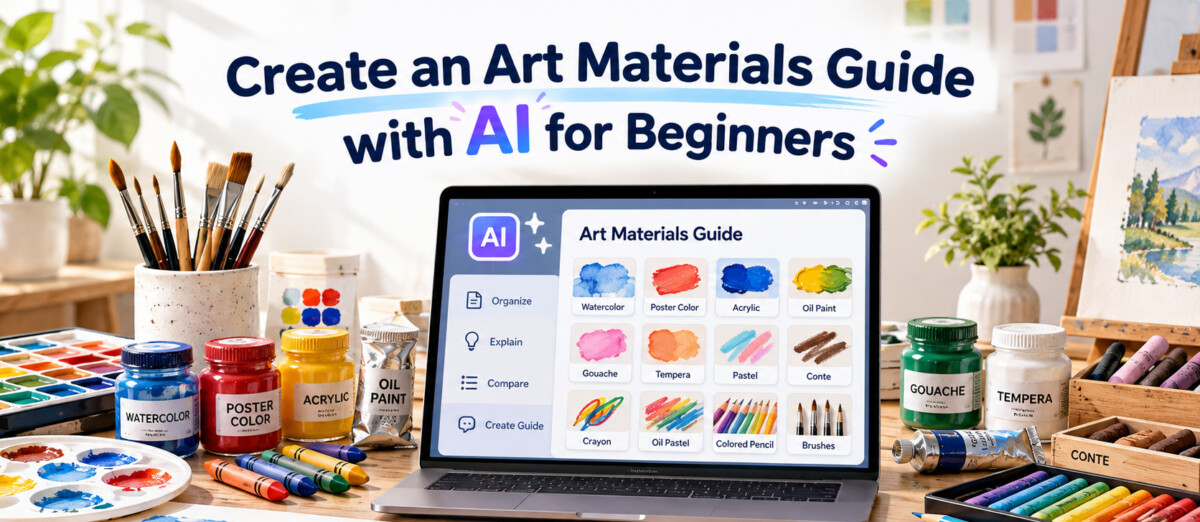
Create an Art Materials Guide with AI for Beginners Using What You Already Know
Create an Art Materials Guide with AI for Beginners
I wanted to see whether I could create an art materials guide with AI for beginners by starting with knowledge I already had rather than asking AI to create the content for me. For many years, I have worked with art materials through my own artmaking and my professional work as an art therapist. Over time, I accumulated notes and practical knowledge about pigments, binders, watercolor, poster color, acrylic paint, oil paint, gouache, tempera, pastel, Conte, crayons, Craypas, oil pastels, and other art materials.
The problem was organization. My notes made sense to me because I already understood the art materials, but I began to wonder whether they would make sense to someone who had never used them before. Could I take what I already knew, give that information to AI, and use AI to help me reorganize it into something clearer, more practical, and more useful for a beginner?
This Project Started With Something I Already Knew
This project grew out of my previous experiment with AI side hustle ideas. When I asked AI to look at my existing background and suggest projects I could realistically create, one of the ideas eventually became an Art Materials Starter Kit for Beginners. That idea immediately felt different from a random digital product suggestion because it connected directly to knowledge I already had. Instead, I wanted to see whether AI could help me take years of accumulated knowledge and reorganize it into a form that might be easier for someone else to understand and use.
What I Had Before Using AI
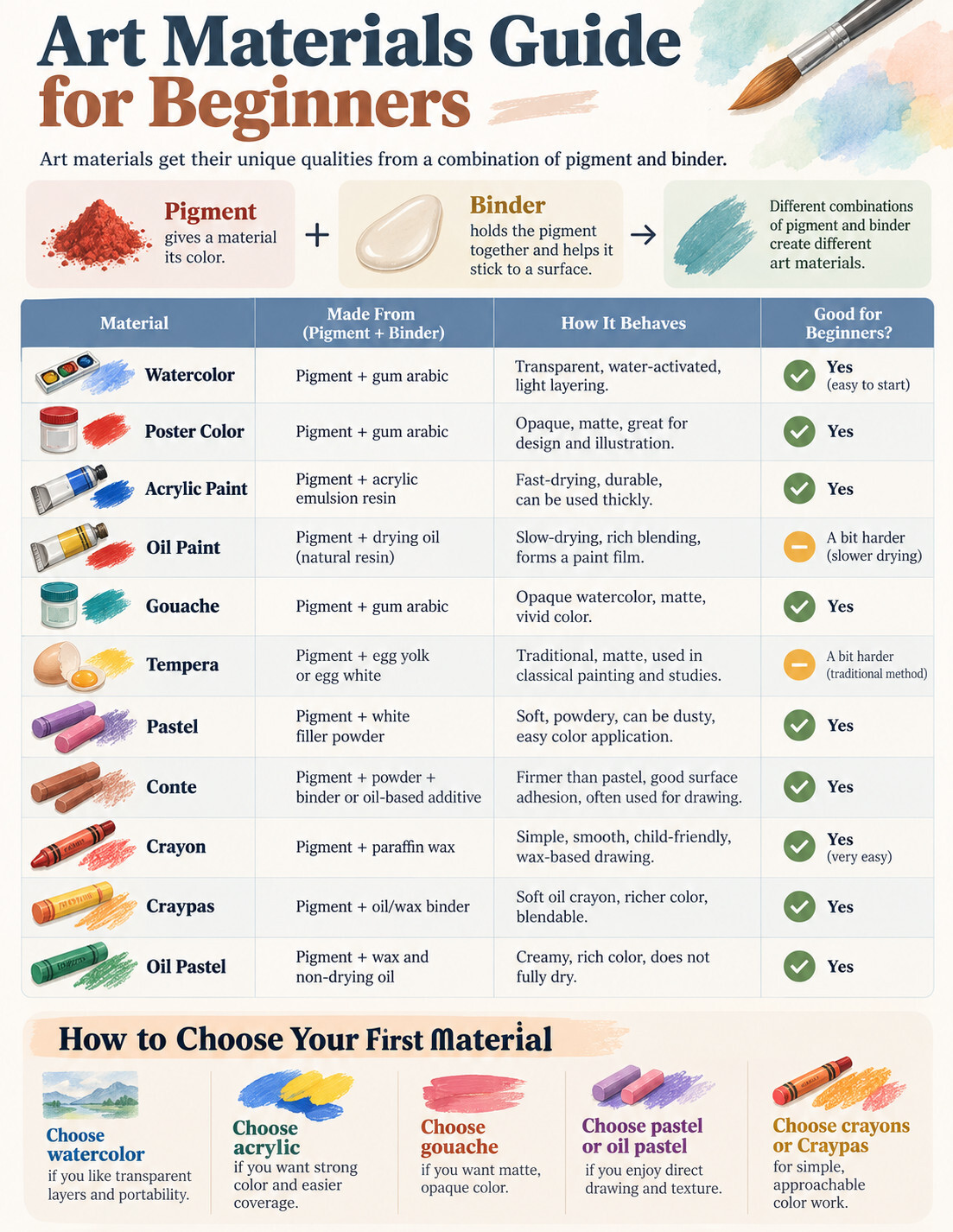
I already had notes about how different art materials are made and why they behave differently. A large part of those notes focused on pigments and binders. Pigment provides the color, while a binder helps hold the pigment together and allows it to attach to a surface. Different combinations of pigments, binders, oils, waxes, fillers, and other ingredients create art materials that behave very differently when we use them.
My original notes included:
- watercolor
- poster color
- acrylic paint
- oil paint
- gouache
- tempera
- pastel
- Conte
- crayon
- Craypas
- oil pastel
I also had notes about qualities such as transparency, opacity, drying behavior, texture, reactivation with water, blending, adhesion, and how the material responds when applied to paper, canvas, or another surface. When I looked at the same notes from the perspective of a complete beginner, I realized that someone new to art would probably have very different questions.
They might want to know what the material actually feels like to use, whether it is messy, whether mistakes can be corrected, what kind of paper is needed, whether the material dries quickly, how much equipment is required, and which material might be easiest to try first. Those were the questions missing from many of my original notes. That is where I wanted AI to help.
What I Wanted AI to Do
I did not want AI to replace my information with a completely new art materials guide but wanted it to work with what I already had. My goal was to use AI to help me organize the information, identify gaps, simplify explanations, and look at the material from a beginner’s point of view. The final guide still needed to come from a combination of my original knowledge, my experience, information I reviewed, and decisions I made myself.
The Prompt I Used
I started with a prompt similar to this:
I have existing notes and professional knowledge about traditional art materials, including pigments, binders, watercolor, poster color, acrylic paint, oil paint, gouache, tempera, pastel, Conte, crayons, Craypas, and oil pastels.
I want to turn this information into a beginner-friendly Art Materials Starter Kit.
Do not replace my knowledge with a completely new guide.
First, help me organize the information I already have.
Then identify questions a complete beginner may have that are not yet answered in my notes.
For each material, suggest a consistent structure that explains:
- what the material is
- what it is made from
- how it behaves
- what it feels like to use
- what basic supplies are needed
- what surfaces work well
- common beginner mistakes
- what someone should consider before buying
Keep the language simple enough for someone who has never studied art materials.
If you add information that was not included in my original notes, identify it separately so I can review it before using it.
That last instruction was especially important to me. I did not want new information generated by AI to quietly blend into my own notes. If AI added an explanation, recommendation, or technical detail, I wanted to know that it had been added so I could review it before including it in the guide.
AI Helped Me See the Difference Between My Notes and a Beginner’s Questions
One of the most useful parts of this process was realizing that the way I naturally organize information is not necessarily the way a beginner needs to receive it. For example, one of my original notes might simply say: Watercolor = pigment + gum arabic.
A beginner may need to know that watercolor is generally transparent, that water changes the strength and movement of the color, that the paper matters, and that covering a mistake can be more difficult than with an opaque paint. The same thing happens with acrylic.
Knowing that acrylic paint contains pigment and acrylic emulsion resin explains something about the material, but a beginner may be more interested in understanding that it dries relatively quickly and that dried areas can usually be painted over. The technical information still matters. AI helped me see how that information could become the beginning of a more practical explanation instead of the end of one.
I Created the Same Structure for Every Material
Once I recognized that difference, I decided that every material in the art materials starter kit should follow the same general structure. That would make it easier for someone to move from one material to another and compare them without having to learn a new format each time.
For each material, I want to explain what it is and what it is made from, followed by how it behaves and what the actual experience of using it may feel like. Then I can move into the practical questions: what basic supplies are needed, which surfaces work well, what mistakes beginners commonly make, what to think about before buying, and what type of person might enjoy working with that particular material. This structure gives the technical information a purpose.
What Art Materials Starter Kit includes:
Watercolor
I want to explain the relationship between pigment, gum arabic, water, transparency, layering, and paper choice, while also showing beginners what watercolor feels like to use.
Poster Color
Poster color can look similar to gouache in some situations, but I want to explain it separately because beginners may encounter it as its own product category and may not understand why it behaves differently from transparent watercolor.
Acrylic Paint
This section can connect acrylic emulsion resin with the paint’s drying behavior, durability, coverage, and the ability to build layers.
Oil Paint
Oil paint introduces a very different experience because of its slower drying time, richer blending possibilities, and oil-based binder. Rather than simply labeling it as more difficult, I want the guide to explain why someone might still choose it.
Gouache
Gouache offers another useful comparison because it is water-based but generally more opaque than transparent watercolor. This section can help beginners understand why two materials that both use water can still create very different results.
Tempera
My notes include traditional tempera using egg yolk or egg white as a binder. This gives me an opportunity to explain both the historical material and why modern products labeled “tempera” may not always be the same as traditional egg tempera.
Pastel
Pastel can introduce the idea of working with a material that contains a large amount of pigment and relatively little binder. Rather than concentrating only on ingredients, I want to describe the directness, softness, blending, dust, and tactile quality of working with it.
Conte
Conte gives me another opportunity to compare materials that may look similar to a beginner but behave differently. Its firmer feel and drawing qualities make it different from a very soft pastel.
Crayon
Crayon is familiar to many people, which can actually make it a useful material to include. It offers a simple way to discuss wax-based media, resistance, layering, and the relationship between familiar childhood materials and artmaking.
Craypas
I also want to include Craypas because it represents another type of oil or wax-based drawing material and may help beginners understand the range between crayons and softer oil pastels.
Oil Pastel
Oil pastel can complete that comparison by showing how pigment, wax, and non-drying oil create a creamy material that remains workable and does not behave like a dry pastel. Putting these materials together creates more than a list. It creates a way to compare families of materials and understand why they behave differently.
AI Can Help Me Build the Comparisons
Once I review and organize the information for every material, I can ask AI to help me compare them across the same practical categories. A beginner could look at differences in transparency, opacity, cleanup, portability, blending, control, drying behavior, ability to cover mistakes, amount of equipment needed, and the type of working space each material requires. The goal is to help someone understand the differences well enough to begin deciding which experience sounds most interesting to them.
The Finished Guide Can Become More Than My Original Table
My original chart was a helpful starting point because it showed the basic relationship between each material, what it is made from, and some of its key characteristics. Now I want that chart to grow into a visual guide that is much more useful for beginners. From there, each material can expand into its own practical section, and those sections can later connect through comparison charts, buying tips, visual examples, and simple questions that help readers decide where to begin. That is where I see AI adding real value. It can help me turn stored knowledge into organized knowledge that is clearer, more practical, and easier for beginners to use.
See the Art Materials Starter Kit
As part of this experiment, I created a first visual version of the Art Materials Starter Kit. The guide brings together the art materials from my original notes and organizes them into a format that is easier for a beginner to compare. It includes the basic relationship between pigment and binder, how different art materials behave, and a simple way to begin thinking about which material might be a good place to start. You can download the Art Materials Starter Kit for Beginners.
I Still Need to Make the Final Decisions
I bring the knowledge, experience, and judgment. AI helps me organize the information, question the structure, identify gaps, and make it easier to communicate.
This Is the First of Six Projects I Plan to Build
In my previous experiment, I chose six AI-assisted project ideas connected to my own background and interests. The Art Materials Starter Kit is the first one I decided to build. I plan to explore the other five projects in future articles as well. For each one, I want to show what I actually create, how I use AI during the process, where AI is useful, where it falls short, what I change myself, and what I learn from the finished result.
Final Thought
This project began with a question: Can AI help me turn something I already know into something another person can actually use? For me, the answer is yes.
AI helped me look at information I had collected over many years from a different perspective. It helped me think more carefully about what a beginner might need to know, where my original notes were too technical, what questions were missing, and how very different art materials could be organized into one consistent guide. Now the challenge is to take watercolor, poster color, acrylic paint, oil paint, gouache, tempera, pastel, Conte, crayons, Craypas, and oil pastels and turn them into a guide that is both visual and detailed enough to be useful.